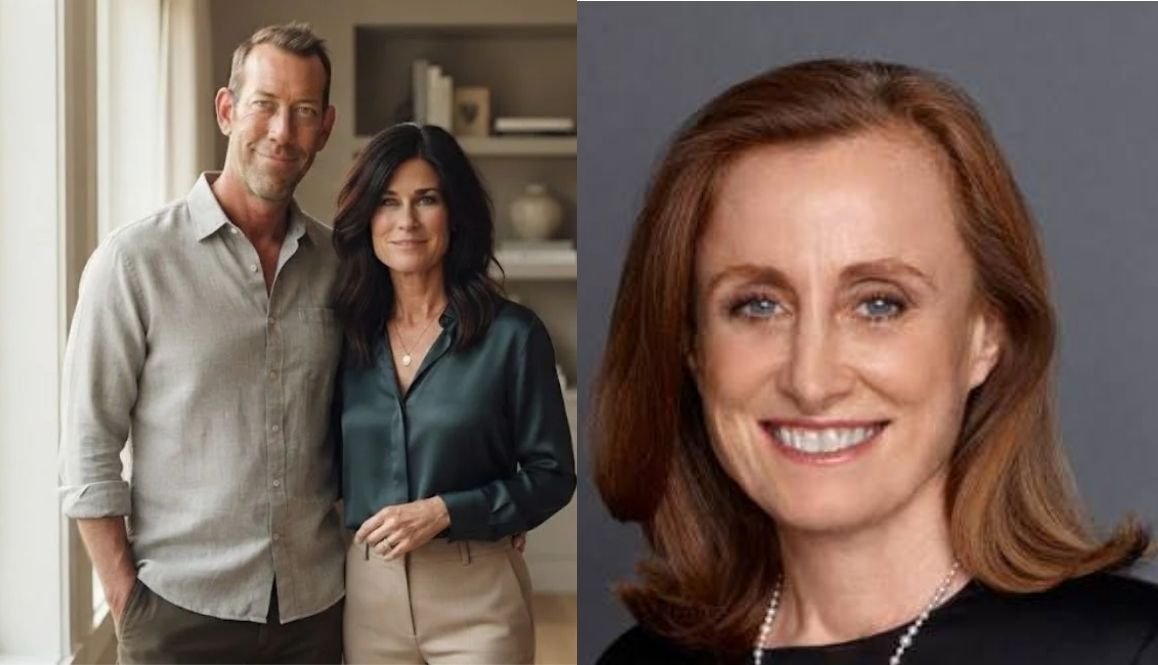
Joanne Schieble is best known as the biological mother of Steve Jobs, the visionary entrepreneur who co-founded Apple and helped transform the technology industry. However, her life story involves much more than her connection to a famous son. It includes a difficult young relationship, family opposition, an adoption decision, and a complicated family history that remained largely private for decades.
Born into an American family with European roots, Joanne faced several personal challenges during the 1950s. Her relationship with Abdulfattah Jandali, a Syrian graduate student, led to the birth of Steve Jobs in 1955. The circumstances surrounding his adoption would later become an important part of the entrepreneur’s personal story.
Understanding Joanne Schieble and Steve Jobs requires looking beyond their biological connection. Their story raises questions about parenthood, identity, separation, and the meaning of family. It also reveals how decisions made under difficult social circumstances can shape lives in ways that nobody could have predicted.
Joanne Schieble Quick Bio
| Detail | Information |
|---|---|
| Full Name | Joanne Carole Schieble |
| Also Known As | Joanne Simpson |
| Known For | Biological mother of Steve Jobs |
| Nationality | American |
| Family Background | Swiss-German ancestry |
| Associated With | Wisconsin, United States |
| Education | University of Wisconsin |
| Field of Study | Graduate studies |
| Profession | Reportedly worked as a speech therapist |
| Former Husband | Abdulfattah Jandali |
| Later Husband | George Simpson |
| Biological Son | Steve Jobs |
| Biological Daughter | Mona Simpson |
| Son’s Birth Date | February 24, 1955 |
| Son’s Birthplace | San Francisco, California |
| Son’s Adoptive Parents | Paul and Clara Jobs |
| Daughter’s Profession | Novelist and writer |
| Famous Family Connection | Apple co-founder Steve Jobs |
| Public Recognition | Her role in Steve Jobs’ family history |
| Personal Life | Largely private |
Who Is Joanne Schieble?
Joanne Schieble was an American woman whose name became widely recognized because of her relationship with Steve Jobs. She was his biological mother, although she did not raise him during his childhood. Instead, Jobs grew up with his adoptive parents, Paul and Clara Jobs, in California. This distinction is central to understanding her place in his life and the complicated circumstances surrounding his early years.
Before becoming connected to one of the world’s best-known technology entrepreneurs, Joanne was a young university student pursuing her education and building her future. Her life changed when she developed a relationship with Abdulfattah Jandali, a fellow student from Syria. Their relationship faced opposition from her family, making an already difficult situation considerably more complicated.
Although her son eventually became internationally famous, Joanne maintained a relatively private life. She was not a technology executive or a prominent public personality. Much of the public information about her comes from accounts of Steve Jobs’ early years, his adoption, and his later efforts to understand his biological family. Consequently, her story is best examined through the historical details that are reasonably well established.
Joanne Schieble’s Early Life and Family Background
Joanne Carole Schieble grew up in Wisconsin in a family of Swiss-German ancestry. Her parents were associated with agricultural and property interests, and she was raised in an environment shaped by traditional family expectations. During the middle of the twentieth century, parental approval often played an important role in decisions about relationships and marriage, especially when cultural or religious differences were involved.
Her upbringing took place during a period when American society generally held more restrictive attitudes toward unmarried motherhood. Women who became pregnant outside marriage frequently experienced social pressure, limited support, and concerns about their reputations. These expectations provide important context for understanding the difficulties Joanne encountered as a young woman, although they cannot fully explain her private thoughts or decisions.
Education was another significant part of her early life. Joanne attended the University of Wisconsin, where she pursued graduate studies and met the man who would become Steve Jobs’ biological father. Her academic background would later become relevant to the adoption arrangements she sought for her son. She placed considerable importance on education, particularly when considering the family environment in which he would grow up.
Joanne Schieble and Abdulfattah Jandali’s Relationship
Joanne Schieble met Abdulfattah Jandali while they were studying at the University of Wisconsin. Jandali was a Syrian student pursuing advanced academic work, including political science. The two developed a romantic relationship despite coming from different cultural and religious backgrounds. Their connection eventually became a defining chapter in both of their lives.
Their relationship reportedly faced strong opposition from Joanne’s father, particularly because Jandali came from a Muslim family. Joanne was raised in a Catholic household, and the differences between their family backgrounds created tension. The opposition should be understood within the historical context of the 1950s, when interfaith and intercultural relationships frequently encountered resistance from relatives.
When Joanne became pregnant, the couple faced a difficult situation. They were not married, and family opposition complicated the possibility of raising a child together. Joanne ultimately arranged for the baby to be adopted. Although later accounts describe the external pressures surrounding this decision, the complete details of her private reasoning are not publicly established. It would therefore be misleading to describe the adoption as either an entirely voluntary choice or a decision made under one single influence.
The Birth of Steve Jobs and His Adoption
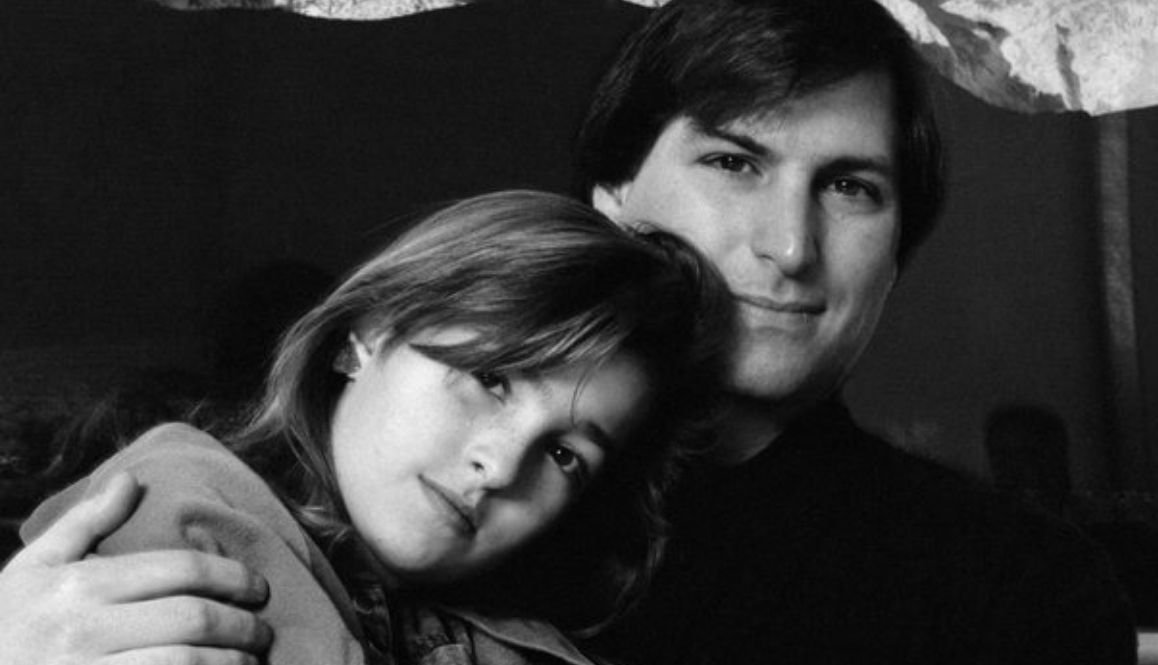
Steve Jobs was born on February 24, 1955, in San Francisco, California. At the time, Joanne Schieble and Abdulfattah Jandali were unmarried. Joanne had arranged for her baby to be placed with adoptive parents, and she wanted those parents to have strong educational backgrounds. The arrangements, however, did not proceed exactly as originally expected.
According to Jobs’ own account, a lawyer and his wife had initially been selected to adopt him. They changed their minds after learning that the baby was a boy, because they had wanted a girl. Paul and Clara Jobs, who were waiting to adopt a child, were then offered the opportunity. They accepted and welcomed the infant into their family, naming him Steven Paul Jobs.
The adoption was not immediately finalized. Joanne learned that Clara had not graduated from college and Paul had not completed high school. Because she had strongly preferred college-educated parents, she initially declined to sign the final documents. She eventually agreed after Paul and Clara promised that their son would attend college. This detail became especially well known when Steve Jobs discussed his adoption during his 2005 Stanford University commencement address.
Why Did Joanne Schieble Give Steve Jobs Up for Adoption?
The question of why Joanne Schieble placed Steve Jobs for adoption is one of the most discussed aspects of her biography. The decision occurred during a period when unmarried pregnancy carried considerable social stigma, particularly in traditional households. Her relationship with Jandali also faced family opposition, making marriage and parenting together difficult at that stage.
It is important to avoid treating the circumstances as proof that Joanne did not want her child. The available accounts suggest a complicated situation involving family expectations, social conventions, and uncertainty about the future. Her insistence that the adoptive parents have college degrees indicates that she was concerned about the educational opportunities available to her son.
Nevertheless, nobody outside the people directly involved can fully reconstruct Joanne’s emotions in 1955. Claims that she felt a specific kind of regret, fear, or relief throughout her life should be treated carefully unless supported by her own documented statements. The decision can be understood within its historical setting without pretending that every private feeling or motivation is known.
Joanne Schieble’s Marriage and Life After the Adoption
After Steve Jobs was adopted, Joanne Schieble’s circumstances changed. Her father died, and she subsequently married Abdulfattah Jandali. Their marriage followed the birth and adoption of their son, creating a particularly complicated family history. The couple went on to have another child, a daughter named Mona, who was born in 1957.
Joanne and Jandali’s marriage did not last. They eventually separated and divorced, and Joanne later married George Simpson. Her daughter became known as Mona Simpson, the name under which she established a successful literary career. These changes illustrate that Joanne’s life continued to develop independently of the son she had placed for adoption.
The details of her later personal life have received relatively little public attention. She has often been described as having worked as a speech therapist, although comprehensive records of her professional career are not widely available. Unlike her famous son and daughter, Joanne did not build a public career around her family connections. Much of her life remained outside the media spotlight.
Steve Jobs’ Childhood With Paul and Clara Jobs
Steve Jobs grew up with Paul and Clara Jobs, the parents who adopted and raised him. The family lived in California, where his childhood experiences helped shape his interests in electronics, engineering, and design. Paul Jobs worked with mechanical equipment and automobiles, introducing his son to the practical skills involved in taking things apart, repairing them, and understanding how they worked.
Jobs consistently identified Paul and Clara as his parents. Although he eventually became interested in his biological background, he did not regard adoption as making his childhood family less legitimate. This distinction matters because discussions about Joanne Schieble sometimes overlook the central role played by the people who raised him.
His adoptive parents also took their educational promise seriously. They supported his development and later helped finance his attendance at Reed College in Oregon. Jobs eventually left the college’s formal degree program, but he continued attending selected classes. His unconventional educational path became part of his larger story about curiosity, independence, and learning beyond traditional academic requirements.
When Did Steve Jobs Learn About His Biological Mother?
Steve Jobs knew that he had been adopted, but detailed information about his biological parents did not become available to him immediately. As he grew older, his interest in his origins developed. Understanding where he came from became part of his personal journey, even while he continued to regard Paul and Clara as his real parents in the everyday meaning of the word.
Accounts of his life indicate that he began uncovering more information about his biological family during adulthood. This process involved learning about Joanne Schieble, Abdulfattah Jandali, and the circumstances surrounding his birth. It also eventually led him to discover that he had a biological sister, Mona Simpson, whom he had not known while growing up.
Learning about biological relatives can involve several separate experiences. Discovering their identities is not the same as developing an emotional relationship with them. In Jobs’ case, his connections with different members of his birth family developed in different ways. His relationship with Mona became especially meaningful, while his relationship with his biological father remained notably distant.
Joanne Schieble and Steve Jobs’ Relationship in Adulthood
The relationship between Joanne Schieble and Steve Jobs is often described as complicated, largely because their biological connection was separated from the experience of raising a child. Joanne gave birth to Jobs but did not participate in his childhood as his mother. By the time information about his biological family became available, Jobs had already formed his personal identity and established his own relationships.
Biographical accounts indicate that Jobs eventually had contact with Joanne. However, their relationship was not documented publicly in the same detail as his connections with some other family members. As a result, broad claims about their emotional closeness, private conversations, or how frequently they met should not be presented as established facts.
What makes their story particularly interesting is the difference between biological connection and lived family experience. Jobs could acknowledge Joanne’s place in his history while maintaining a deep attachment to Paul and Clara. His story demonstrates that discovering a biological parent does not necessarily replace an existing parental relationship. Both connections may have significance, but they do not automatically serve the same emotional role.
Joanne Schieble and Mona Simpson’s Family Connection
Mona Simpson is Joanne Schieble’s daughter and Steve Jobs’ younger biological sister. She became an accomplished American novelist, known for works including Anywhere but Here and A Regular Guy. Her literary career developed independently of Jobs’ achievements in technology, although their family connection eventually attracted considerable public interest.
Unlike Steve Jobs, Mona grew up knowing Joanne as her mother. Their different childhood experiences meant that the siblings approached their shared family history from separate perspectives. One had been adopted shortly after birth, while the other remained with their biological mother. These differences became part of the unusual background surrounding their eventual relationship.
When Steve and Mona connected as adults, they developed a close sibling bond. Their relationship became one of the more meaningful connections in Jobs’ biological family story. Mona later spoke and wrote publicly about her brother, including delivering a remembrance following his death in 2011. Their relationship illustrates how siblings separated by circumstances can form important personal connections later in life.
Steve Jobs and His Biological Father, Abdulfattah Jandali
Steve Jobs’ relationship with Abdulfattah Jandali differed significantly from his connection with Mona Simpson. Although Jandali was his biological father, Jobs did not develop a close father-son relationship with him. Public accounts indicate that Jobs learned information about Jandali but did not pursue the kind of reunion that might have been expected in a more conventional family narrative.
One widely reported detail concerns a restaurant encounter. Jandali, who worked in the restaurant business, reportedly met Jobs without realizing that the famous customer was his biological son. Jobs later learned of the connection. The story is striking because it demonstrates how two people can cross paths without understanding the personal history they share.
Still, Jobs’ distance from Jandali should not be used to assume that he felt exactly the same way about Joanne. Relationships with biological parents can develop differently, even when both parents were involved in the original adoption circumstances. In this family, the connections between Jobs, Joanne, Jandali, and Mona followed separate paths, reflecting a history that cannot be reduced to a single explanation.
How Adoption Influenced Steve Jobs’ Identity
Adoption was part of Steve Jobs’ personal history, but its precise influence on his personality remains open to interpretation. Biographers have explored whether his early separation from his biological parents affected his sense of independence, his desire for control, or his relationships with others. These interpretations can be interesting, but they should not be confused with proven psychological explanations.
Jobs himself offered a more concrete perspective when discussing his adoption publicly. He emphasized the importance of the parents who raised him and recalled the promise that he would receive a college education. His experiences with Paul and Clara shaped his childhood, while his biological family history added another dimension to his understanding of himself.
It would be inaccurate to claim that adoption alone explains Jobs’ ambition, creativity, difficult management style, or professional achievements. Those characteristics developed through many influences, including his upbringing, friendships, educational experiences, work, and personal choices. Adoption is an important part of his biography, but it is not a complete explanation for the person he became.
Joanne Schieble’s Influence on Steve Jobs’ Life
Joanne Schieble’s most clearly documented influence on Steve Jobs came through the circumstances of his birth and adoption. Her insistence on educational opportunities helped shape the agreement under which Paul and Clara adopted him. That agreement later became significant enough for Jobs to mention publicly during one of the most famous speeches of his career.
This does not mean that Joanne directly shaped his interest in computers, product design, or entrepreneurship. Those influences are more closely connected to his upbringing, his exposure to electronics, and his experiences in California’s developing technology community. Distinguishing direct influence from indirect historical importance helps provide a more accurate understanding of her place in his life.
Her story also adds context to discussions about family and opportunity. Joanne wanted her child to receive an education, yet Jobs eventually became famous partly for following an unconventional academic path. The contrast is notable: the promise of college mattered to his adoption, while his decision to leave formal college studies became an important turning point in his personal story.
Why Joanne Schieble’s Story Still Matters
Joanne Schieble’s biography attracts interest because it reveals a less familiar side of Steve Jobs’ life. Most discussions of Jobs focus on Apple, technological innovation, leadership, and business success. His biological family history offers a different perspective, showing that his life began with circumstances far removed from the public achievements for which he eventually became famous.
Her experiences also provide a window into changing social attitudes. In the 1950s, unmarried mothers often faced pressures that are difficult to appreciate without considering the expectations of the period. Joanne’s relationship, pregnancy, and adoption decision took place within that environment. Her story helps explain why historical family decisions should be evaluated with attention to the circumstances in which they occurred.
At the same time, Joanne deserves to be understood as a person rather than simply as the woman who gave birth to Steve Jobs. She was a student, a partner, a mother to two children, and someone whose personal life continued after the adoption. Although much of her history remains private, the details that are publicly known are enough to show that her life cannot be summarized by one decision.
Common Misconceptions About Joanne Schieble and Steve Jobs
One common misconception is that Joanne Schieble abandoned Steve Jobs because she did not care about him. The documented circumstances do not support such a simple conclusion. She faced family opposition and restrictive social expectations, and she took an active interest in the educational background of his prospective adoptive parents. These facts do not reveal every emotion she experienced, but they challenge an overly simplistic interpretation of the adoption.
Another misunderstanding is that Jobs rejected his adoptive family after discovering his biological relatives. In reality, he consistently recognized Paul and Clara Jobs as his parents. Learning about Joanne and developing a relationship with Mona did not erase the childhood experiences or family connections that had shaped him. His biological history and adoptive upbringing were both parts of his identity.
A third misconception is that every detail of Joanne’s later relationship with Jobs is publicly known. While the broad family history has been discussed extensively, their private interactions are less thoroughly documented. Reliable biography requires acknowledging these limits instead of inventing emotional reunions, arguments, or conversations. The available facts already provide a compelling story without adding unsupported details.
Joanne Schieble’s Family Legacy Beyond Steve Jobs
Joanne Schieble’s family legacy includes two children who achieved recognition in very different fields. Steve Jobs became one of the most influential figures in modern technology, while Mona Simpson established herself as a respected novelist. Their careers followed separate paths, but both became part of a remarkable family history shaped by separation and later discovery.
The siblings’ eventual relationship added an unexpected chapter to that history. Although they did not share a childhood, they formed a bond as adults and found ways to understand their shared origins. Their connection illustrates that family relationships can begin or deepen at different stages of life, even after decades of separation.
Joanne’s significance should not be measured only through her children’s professional accomplishments. Her story also reflects the experiences of women who navigated difficult personal decisions during a restrictive social period. Remembering that wider context allows readers to understand her more fairly and recognize the human circumstances behind a family history that later became internationally known.
Final Thoughts
The relationship between Joanne Schieble and Steve Jobs is an important but often misunderstood part of the Apple co-founder’s biography. Their connection began with his birth in 1955, followed by an adoption shaped by family opposition, educational expectations, and the social attitudes of the time. These circumstances separated them during his childhood but remained part of his personal history.
Joanne’s life did not stop with that decision. She later married, raised her daughter Mona Simpson, and lived much of her life outside public attention. Steve Jobs, meanwhile, grew up with Paul and Clara Jobs, built a revolutionary career, and eventually learned more about his biological relatives.
Ultimately, Joanne Schieble’s story is about more than being the biological mother of a famous entrepreneur. It highlights the complexities of adoption, the importance of understanding historical circumstances, and the different meanings that family relationships can hold. Her place in Steve Jobs’ life is best understood through a balanced account that respects both the known facts and the private experiences that remain undocumented.
Frequently Asked Questions (FAQs)
1. Who was Joanne Schieble?
Joanne Schieble, also known as Joanne Simpson, was the biological mother of Apple co-founder Steve Jobs and novelist Mona Simpson. She attended the University of Wisconsin and lived much of her life outside public attention.
2. Why did Joanne Schieble give Steve Jobs up for adoption?
Joanne placed Steve Jobs for adoption in 1955 while facing family opposition to her relationship with Abdulfattah Jandali. The social pressures surrounding unmarried motherhood also provide important context for the decision.
3. Did Joanne Schieble ever reunite with Steve Jobs?
Biographical accounts indicate that Steve Jobs eventually had contact with his biological mother. However, detailed information about the nature and frequency of their private interactions remains limited.
4. Who was Joanne Schieble’s husband?
Joanne Schieble married Abdulfattah Jandali after Steve Jobs was placed for adoption. Their marriage later ended in divorce, and she subsequently married George Simpson.
5. How many children did Joanne Schieble have?
Joanne Schieble had two biological children: Steve Jobs, born in 1955, and Mona Simpson, born in 1957. Steve was adopted shortly after birth, while Mona grew up with her mother.
6. What was Joanne Schieble’s profession?
Joanne Schieble has been described in biographical accounts as having worked as a speech therapist. However, comprehensive publicly available information about her professional career is limited.
7. What was Joanne Schieble’s relationship with Steve Jobs like?
Their relationship was complicated by the fact that Steve Jobs was adopted and raised by Paul and Clara Jobs. Although he eventually learned about Joanne, much of their personal relationship remained private.

One thought on “Joanne Schieble and Steve Jobs: Understanding Their Complicated Family Relationship”